Posted on

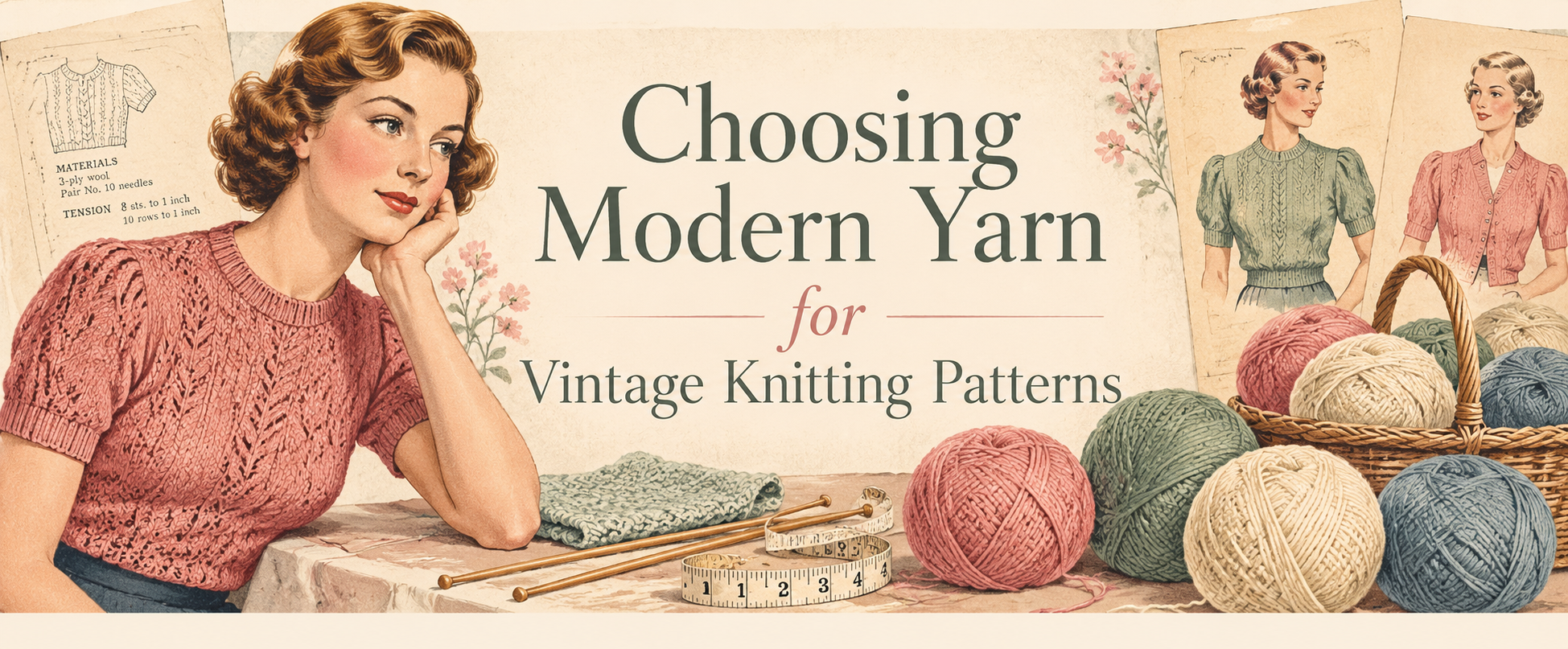
Choosing Modern Yarn for Vintage Knitting Patterns

You’ve found a lovely 1930s jumper or a 1940s cardigan that you’d really like to knit. The pattern looks straightforward enough, but then you reach the materials list. It asks for eight ounces of a wool you’ve never heard of, in a 3-ply or perhaps a 4-ply, made by a company that may have disappeared decades ago. So what do you use instead? Fortunately, you don’t need to track down the original wool to make a vintage pattern. Modern yarns can work beautifully, provided you choose something suitable for the design.The trick is knowing what to look for. Continue reading Choosing Modern Yarn for Vintage Knitting Patterns
Posted on

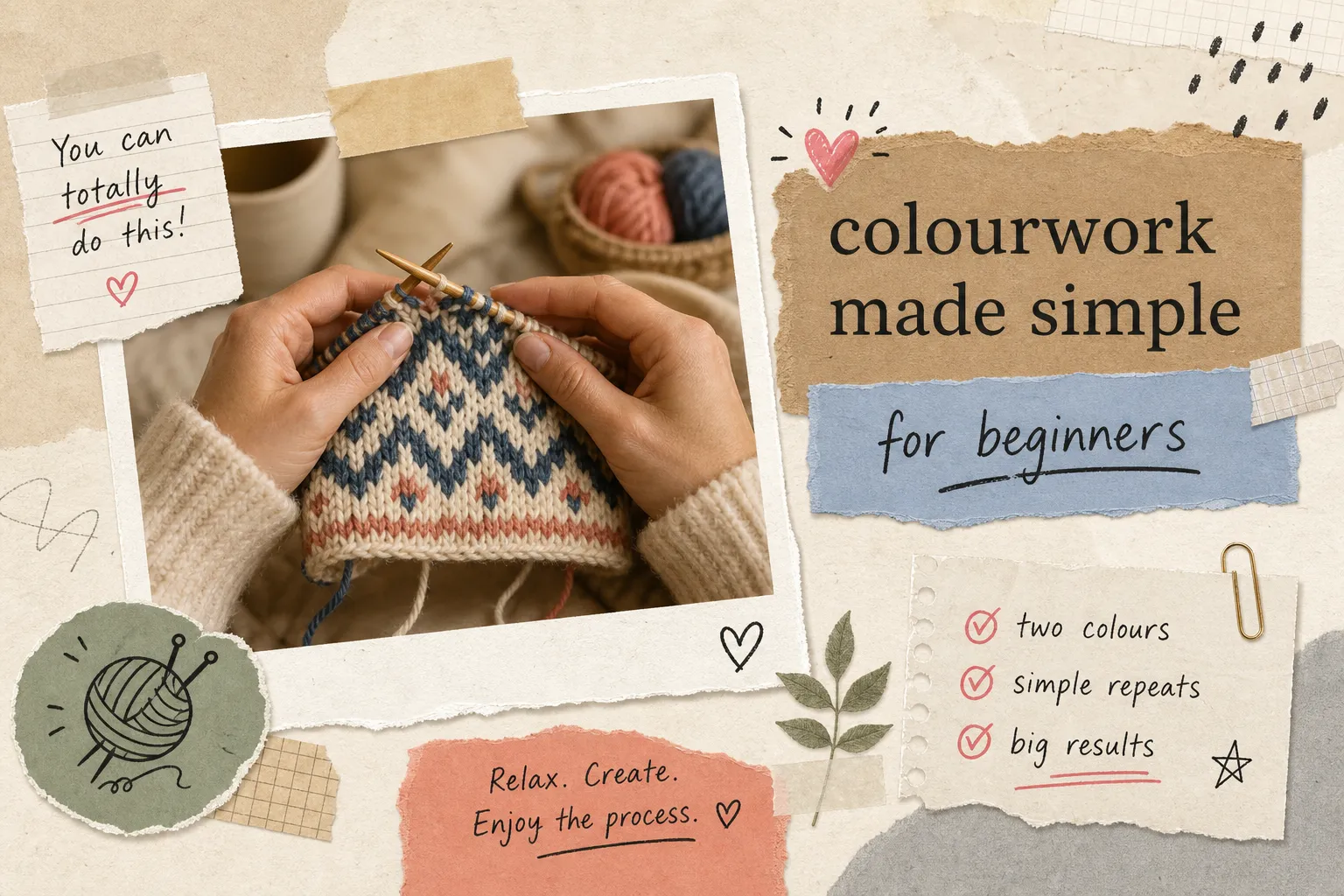
Stranded colour-work knitting for absolute beginners

Multi-colour knitting has a reputation for being something only experienced knitters tackle. You see a beautifully patterned jumper or a cosy Fair Isle hat, and your first thought is probably “I could never do that.” Honestly, that’s a completely understandable reaction. But here’s the thing: stranded Fair Isle knitting for beginners is far more approachable than it looks. The reason it feels daunting is that most tutorials skip straight to the tricky parts without explaining the simple logic underneath.

Britain has a particularly rich tradition of this kind of knitting. Fair Isle, the most famous style within stranded colour-work, comes from a small island off the coast of Shetland, and its geometric patterns have been part of British craft culture for many decades. That history is part of what makes learning the technique feel so satisfying. You’re not just picking up a skill; you’re connecting with something genuinely enduring. Continue reading Stranded colour-work knitting for absolute beginners

Posted on

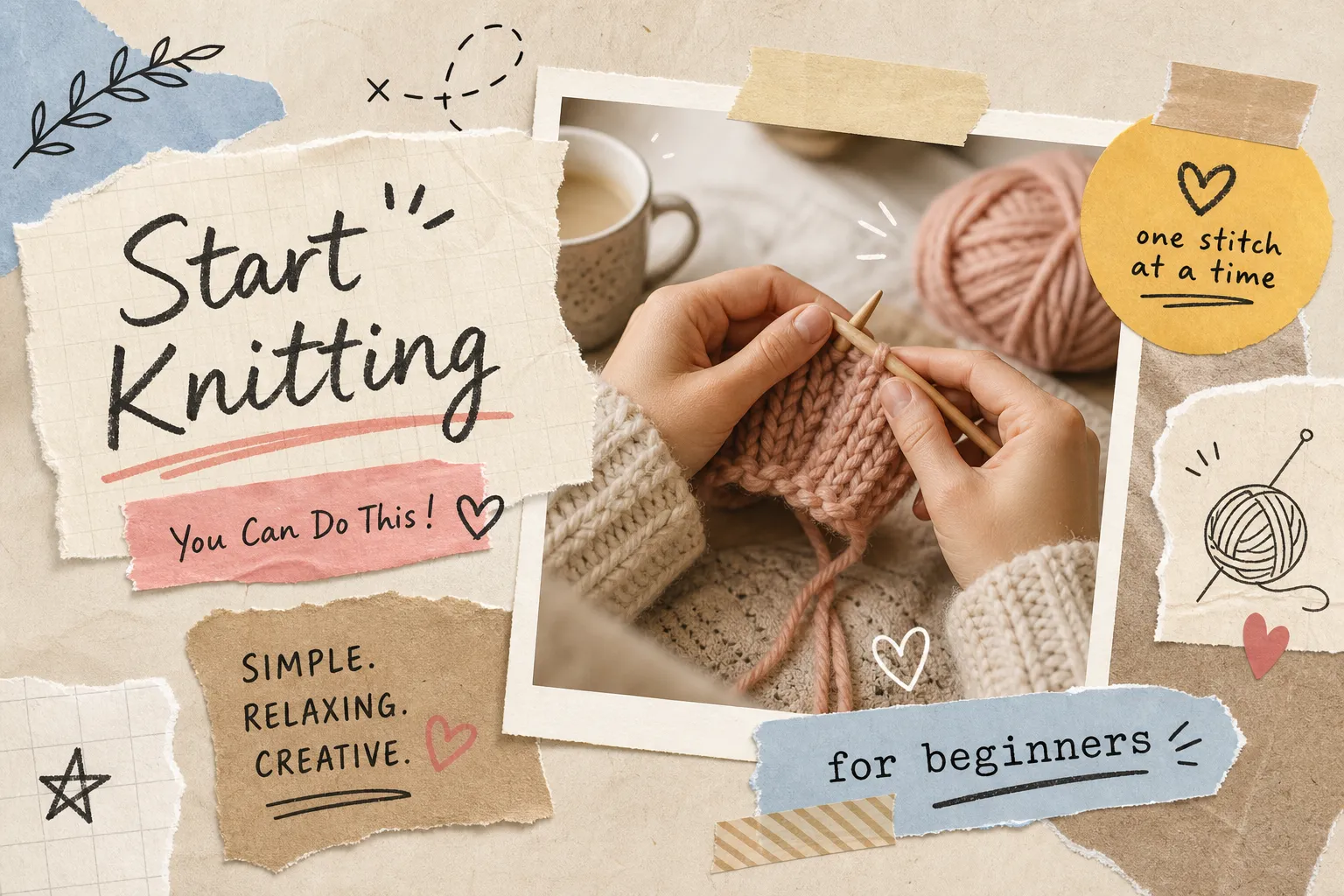
Knitting for Beginners: How to Start Knitting and Avoid the Mistakes Most New Knitters Make

Knitting for Beginners: Your Complete Starter Guide

Learning to knit is easier than most people think.

The problem isn’t that knitting is difficult. It’s that beginners are often given too much information too soon. One minute you’re buying your first ball of yarn, the next you’re reading about
tension squares, circular needles, yarn weights and pattern abbreviations.

In reality, every knitting project starts with just four basic techniques: cast on, knit, purl and cast off.

At My Vintage Wish, we’ve spent years working with vintage knitting patterns from the 1920s through to the 1970s, and we’ve noticed something interesting. The knitters who make the
fastest progress aren’t necessarily the most talented. They’re the ones who focus on the basics first and leave everything else for later.

This guide will show you exactly what you need to start knitting, the beginner mistakes to avoid, and how to build enough confidence to tackle your first real project. Continue reading Knitting for Beginners: How to Start Knitting and Avoid the Mistakes Most New Knitters Make

Posted on

Weldon’s A1240: The 1950s Jumper-Cardigan That Still Turns Heads Today!

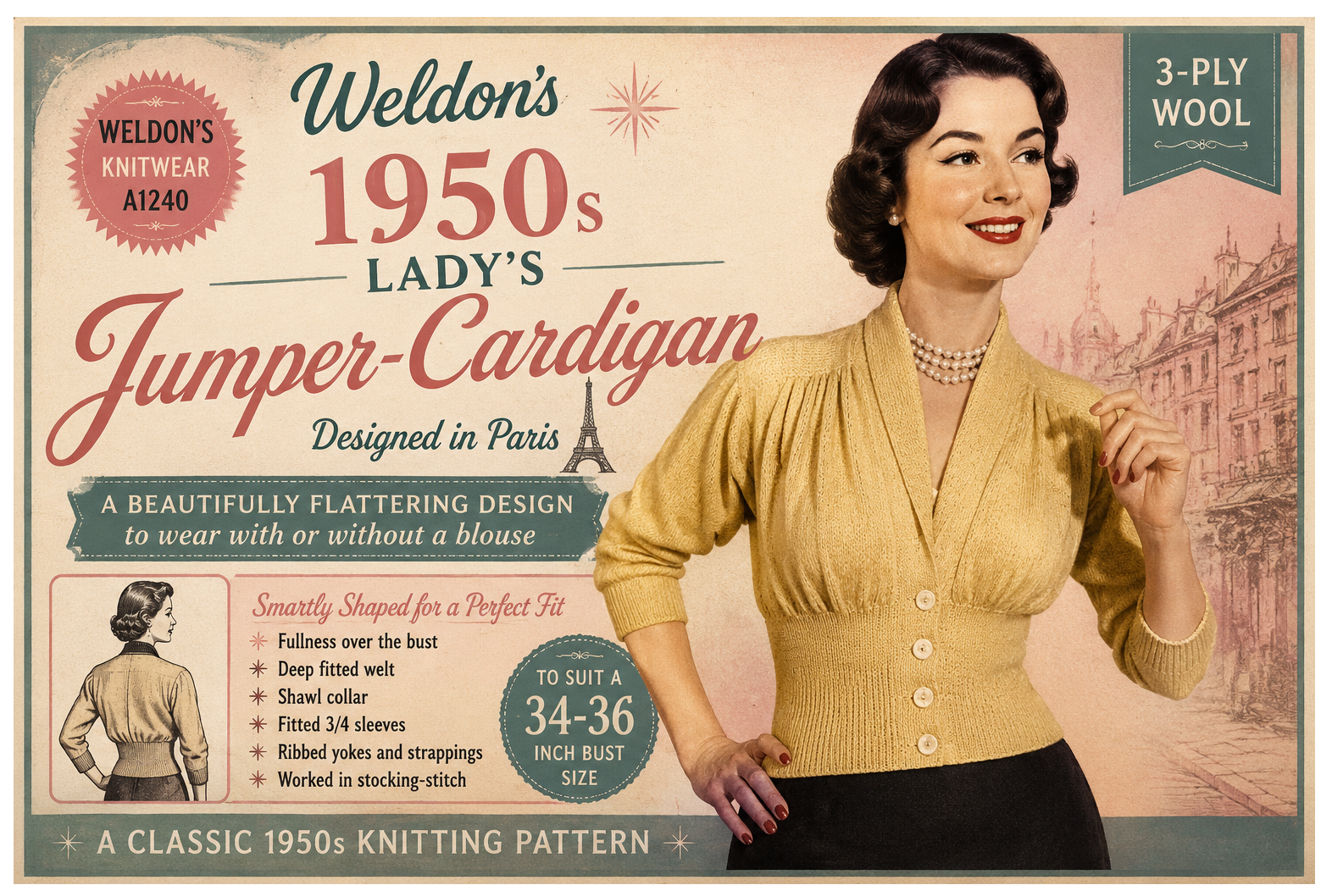
If you’ve ever admired the beautifully fitted knitwear worn by film stars and fashion icons of the 1950s, Weldon’s A1240 Lady’s Jumper-Cardigan offers the opportunity to recreate that timeless elegance with your own knitting needles.

Originally published by Weldon’s and designed in Paris, this charming vintage pattern captures everything knitters love about mid-century fashion. Featuring a deeply ribbed waist, flattering bust shaping, an elegant shawl collar and graceful three-quarter sleeves, it creates the classic hourglass silhouette that defined the decade. Unlike many modern knitting patterns that favour oversized styles, this design celebrates feminine tailoring and careful shaping. Continue reading Weldon’s A1240: The 1950s Jumper-Cardigan That Still Turns Heads Today!

Posted on

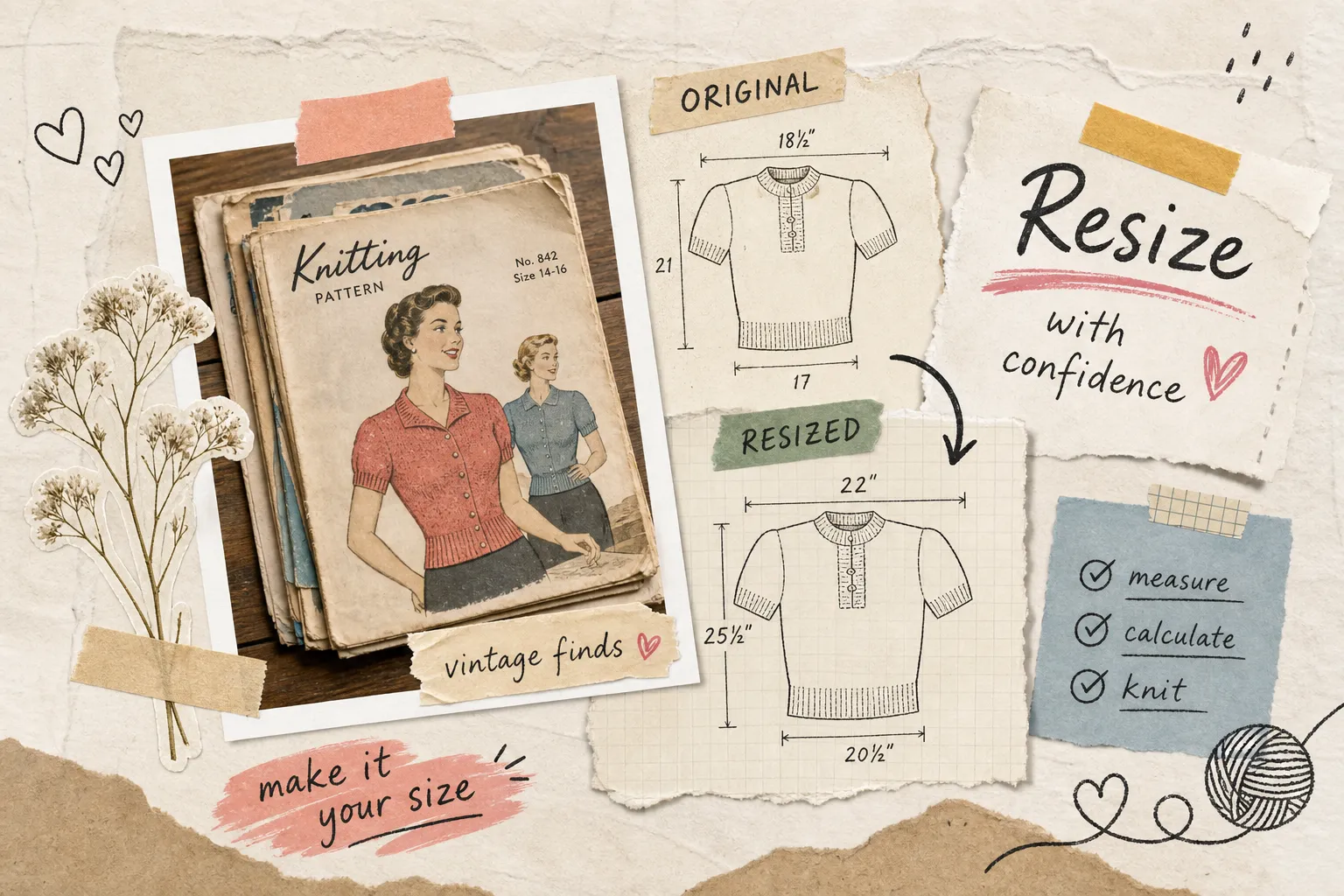
How to Resize a Vintage Knitting Pattern Step by Step

How to Resize a Vintage Knitting Pattern Step by Step

You find a stunning 1940s cardigan pattern. The photography is gorgeous, the silhouette is exactly what you’ve been searching for, and then you look at the sizing. “To fit 34-inch bust.” You measure yourself. You’re a modern size 14. You stare at the page for a while, wondering if these numbers belong to a different universe entirely. They sort of do.

That gap between what a vintage label says and what your body actually needs is where most crafters abandon the whole idea. Which is a shame, because knowing how to resize a vintage knitting pattern is genuinely learnable. It takes a little maths, a reliable swatch, and the patience to work through the steps in the right order. Once you understand the sequence, none of it is as intimidating as it first appears.

Continue reading How to Resize a Vintage Knitting Pattern Step by Step