
Posted on

How to Start Sewing Vintage Clothes: A Beginner’s Guide for Vintage Lovers

How to Start Sewing Vintage Clothes: A Beginner’s Guide for Vintage Lovers

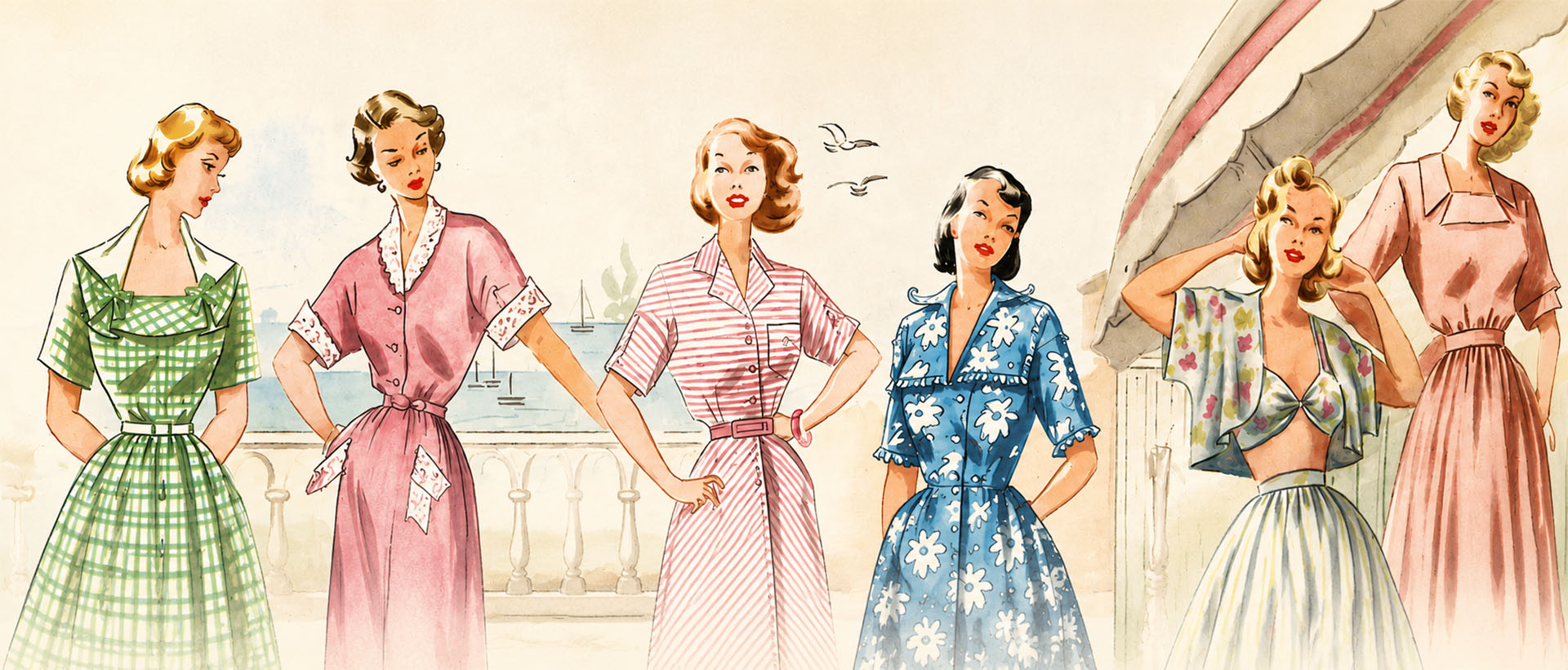
There’s a moment that happens to almost every person who decides to start sewing vintage clothes.

You’ve found a pattern you love, perhaps a 1950s tea dress, a smart 1940s shirtwaist, or an elegant 1930s gown that seems impossibly glamorous. The whole project feels exciting and entirely achievable. Then you open the envelope. The size on the front bears no resemblance to anything you recognise. The instructions reference techniques you’ve never heard of. The illustration on the cover looks nothing like the pattern pieces spread across your table. If that sounds familiar, you’re not doing anything wrong. In fact, you’re experiencing exactly what almost everyone experiences when they first discover vintage sewing.

Vintage sewing has its own learning curve. It isn’t quite the same as modern dressmaking, and it certainly isn’t the same as buying clothes from the high street. Yet for many vintage enthusiasts, learning to sew becomes a natural extension of collecting, wearing, and appreciating vintage fashion.

Whether you’ve discovered reproduction patterns through My Vintage Wish, inherited a collection of original sewing patterns, or simply fallen in love with historical fashion, sewing
offers a deeper connection to the garments and decades that inspire you.
The good news is that the learning curve is shorter than you think.

Continue reading How to Start Sewing Vintage Clothes: A Beginner’s Guide for Vintage Lovers
Posted on

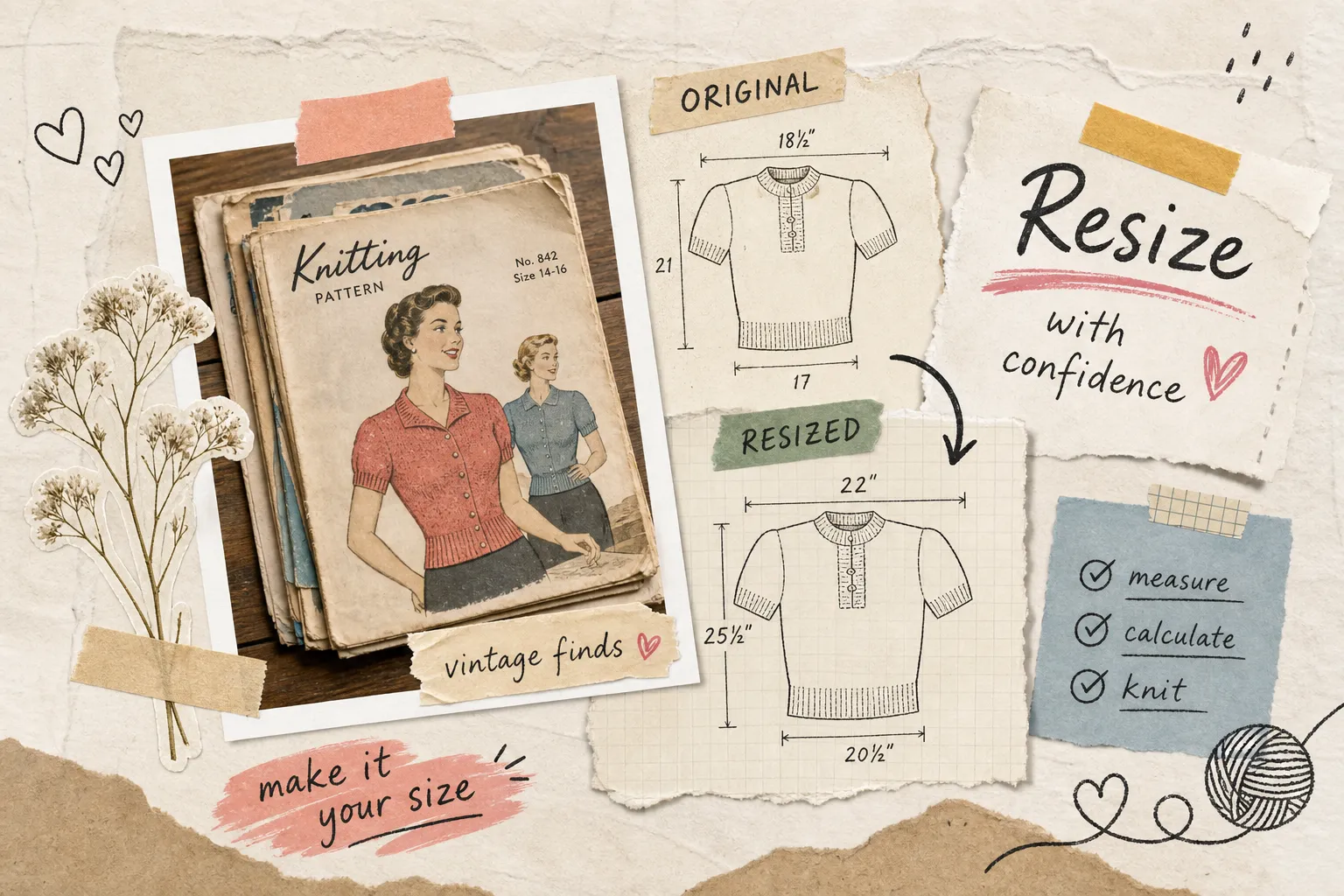
How to Resize a Vintage Knitting Pattern Step by Step

How to Resize a Vintage Knitting Pattern Step by Step

You find a stunning 1940s cardigan pattern. The photography is gorgeous, the silhouette is exactly what you’ve been searching for, and then you look at the sizing. “To fit 34-inch bust.” You measure yourself. You’re a modern size 14. You stare at the page for a while, wondering if these numbers belong to a different universe entirely. They sort of do.

That gap between what a vintage label says and what your body actually needs is where most crafters abandon the whole idea. Which is a shame, because knowing how to resize a vintage knitting pattern is genuinely learnable. It takes a little maths, a reliable swatch, and the patience to work through the steps in the right order. Once you understand the sequence, none of it is as intimidating as it first appears.

Continue reading How to Resize a Vintage Knitting Pattern Step by Step

Posted on

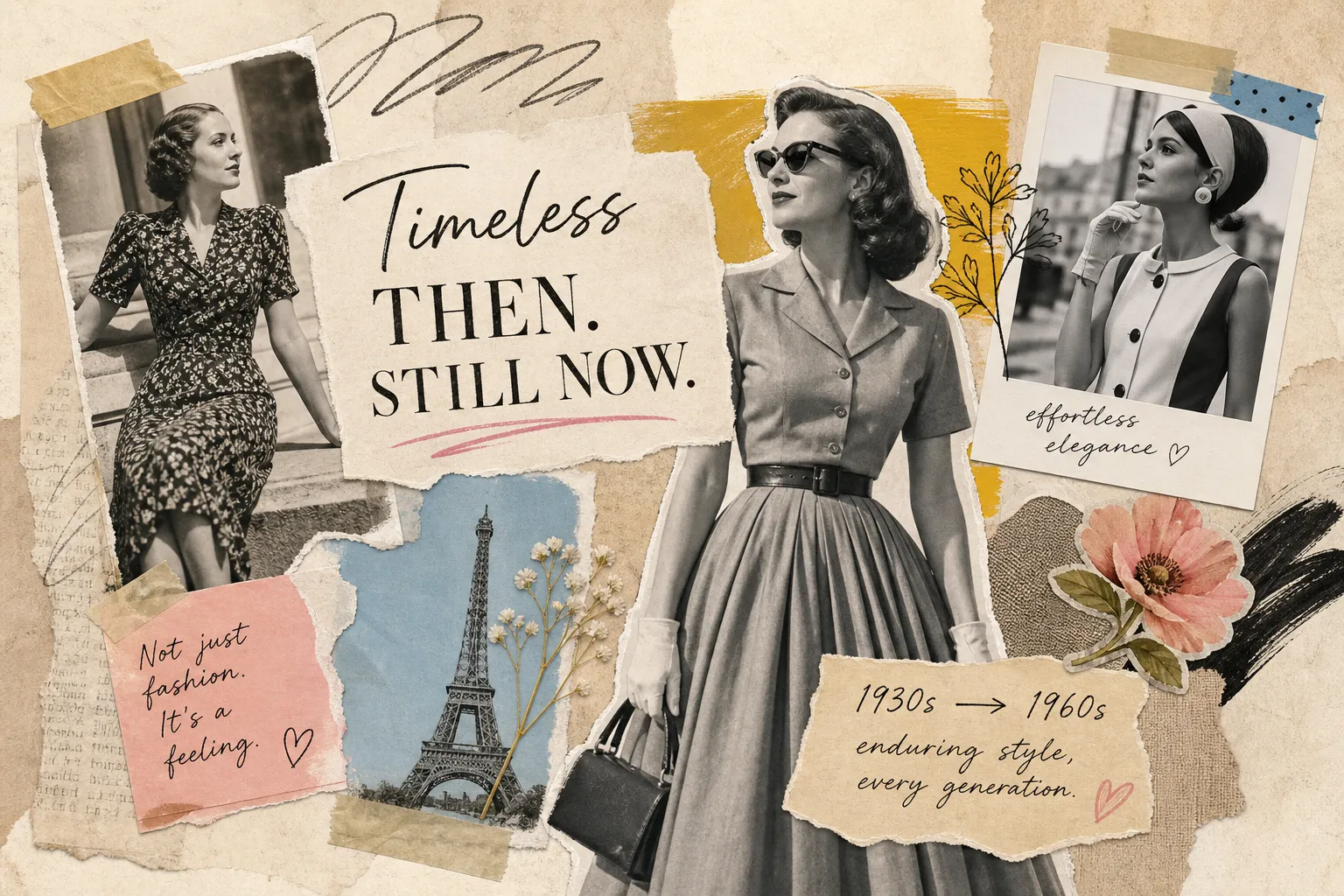
Why vintage fashion from the 1930s to 1960s endure

Why vintage fashion from the 1930s to 1960s endures

There’s a particular moment that happens to a lot of vintage makers and craft enthusiasts. You’re scrolling through pattern images, or flicking through a box at a market, and something from the 1940s or 1950s makes you stop completely. It’s not that it looks right. The waist sits exactly where a waist should sit. The collar has a confidence to it. The silhouette holds a logic that feels almost like common sense, even though you can’t immediately explain why.

That feeling isn’t nostalgia in the sentimental sense. It’s more like recognition, as though the design is tapping into something you already understood without knowing it. Browsing the pattern collection at My Vintage Wish produces exactly this effect: hundreds of authentic patterns from the 1930s through to the 1960s sitting in one catalogue, and suddenly these decades stop feeling like history. They feel like possibility.

So what is it, exactly, that keeps these eras alive in 2026? This piece looks at the aesthetics, the cultural weight, the quality of construction, and the nostalgia that make style from the 1930s to the 1960s so persistently compelling, not just to collectors and costume makers, but to anyone who has ever picked up a pair of knitting needles or sat down at a sewing machine and wanted to make something that actually means something. Continue reading Why vintage fashion from the 1930s to 1960s endure