
Posted on

Stranded colour-work knitting for absolute beginners

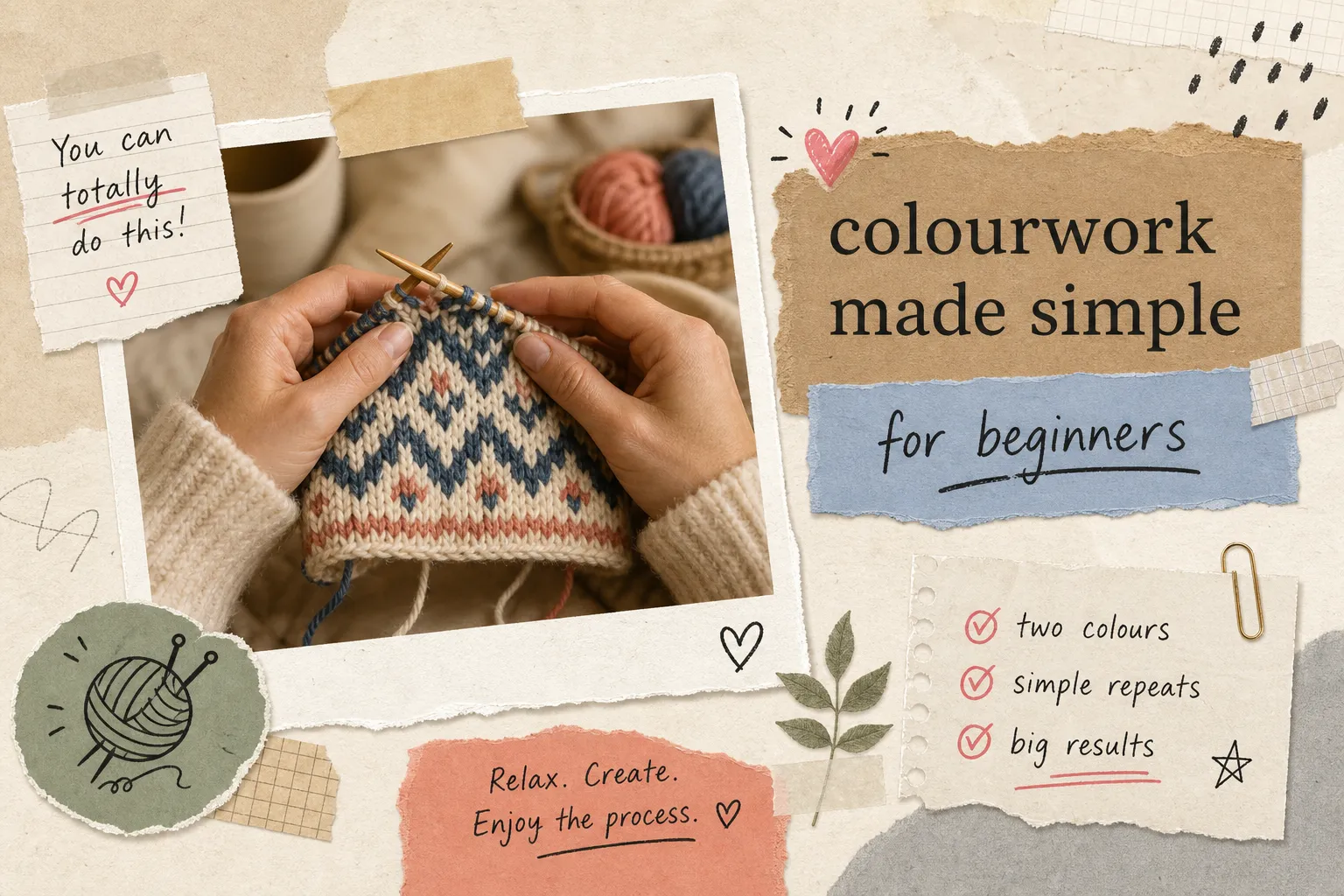
Multi-colour knitting has a reputation for being something only experienced knitters tackle. You see a beautifully patterned jumper or a cosy Fair Isle hat, and your first thought is probably “I could never do that.” Honestly, that’s a completely understandable reaction. But here’s the thing: stranded Fair Isle knitting for beginners is far more approachable than it looks. The reason it feels daunting is that most tutorials skip straight to the tricky parts without explaining the simple logic underneath.

Britain has a particularly rich tradition of this kind of knitting. Fair Isle, the most famous style within stranded colour-work, comes from a small island off the coast of Shetland, and its geometric patterns have been part of British craft culture for many decades. That history is part of what makes learning the technique feel so satisfying. You’re not just picking up a skill; you’re connecting with something genuinely enduring. Continue reading Stranded colour-work knitting for absolute beginners
Posted on

How to Adjust Old Patterns to Modern Sizing

Featured content

How to Adjust Old Patterns to Modern Sizing

You’ve found it.

The pattern you’ve been looking for: a beautifully illustrated 1940s tea dress with a fitted bodice, a gentle flare, and the kind of effortless elegance that modern patterns rarely capture.
Perhaps you spotted it whilst browsing My Vintage Wish, where original sewing patterns from the 1930s, 1940s, 1950s and 1960s sit waiting to be brought back to life. From wartime
utility dresses and elegant tea frocks to fitted cardigans and classic skirt designs, every pattern comes with its own sizing challenges and rewards. You pick up the envelope, turn it
over and find the size chart. Then you stop. A size 16 that lists a 34-inch (86 cm) bust. A waist measurement that seems impossibly small. The number on the envelope doesn’t match
anything in your experience of modern sizing, and for a moment the whole project feels pointless.

This is the point where many sewers either abandon the pattern entirely or push ahead without understanding the measurements, only to end up with something that doesn’t fit.
Neither outcome is necessary.

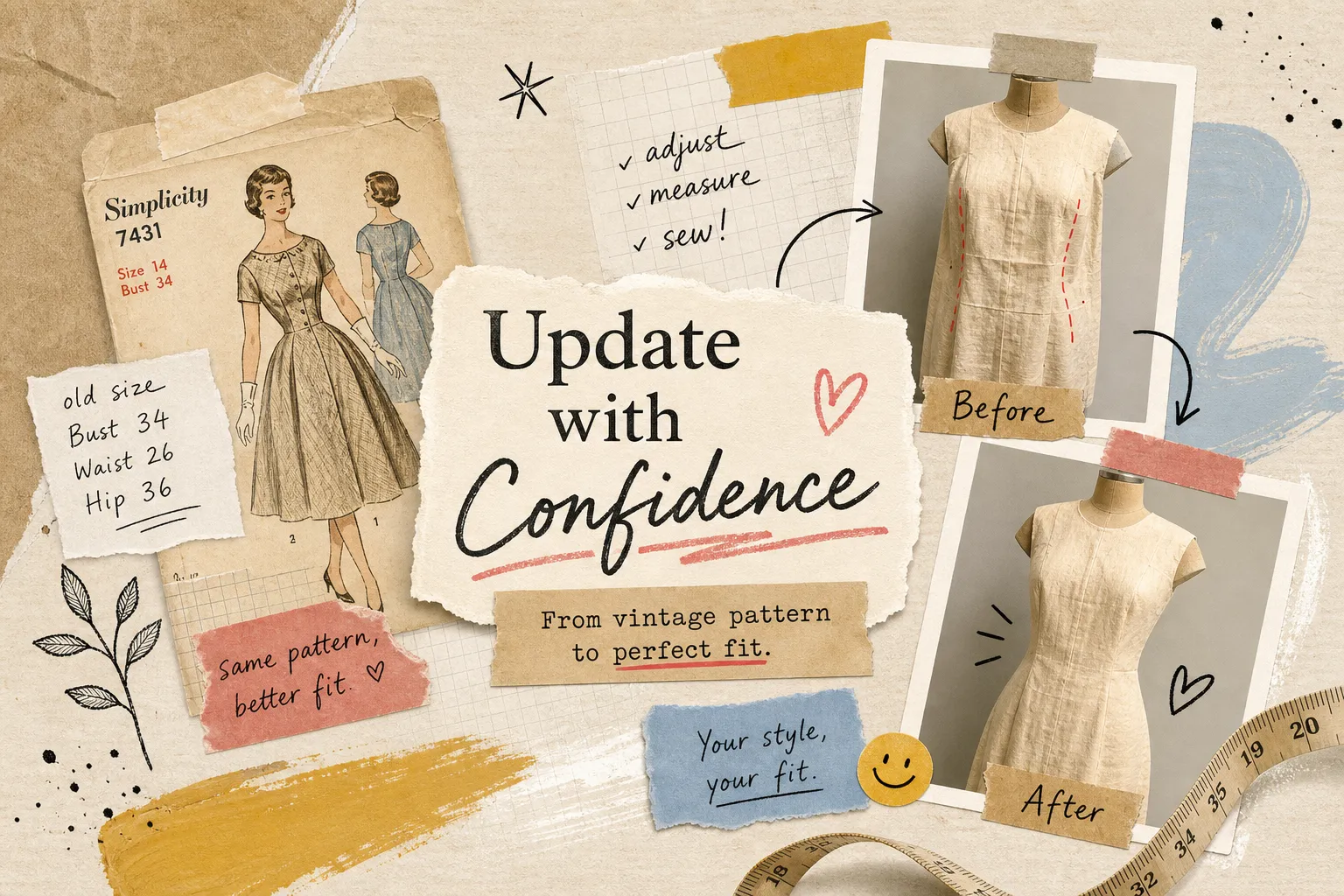
Learning how to adjust old patterns to modern sizing is completely achievable. The process follows a logical sequence: measure first, compare measurements, account for ease, make
size adjustments, refine the fit where needed, and test everything in a toile before cutting your final fabric. Continue reading How to Adjust Old Patterns to Modern Sizing