

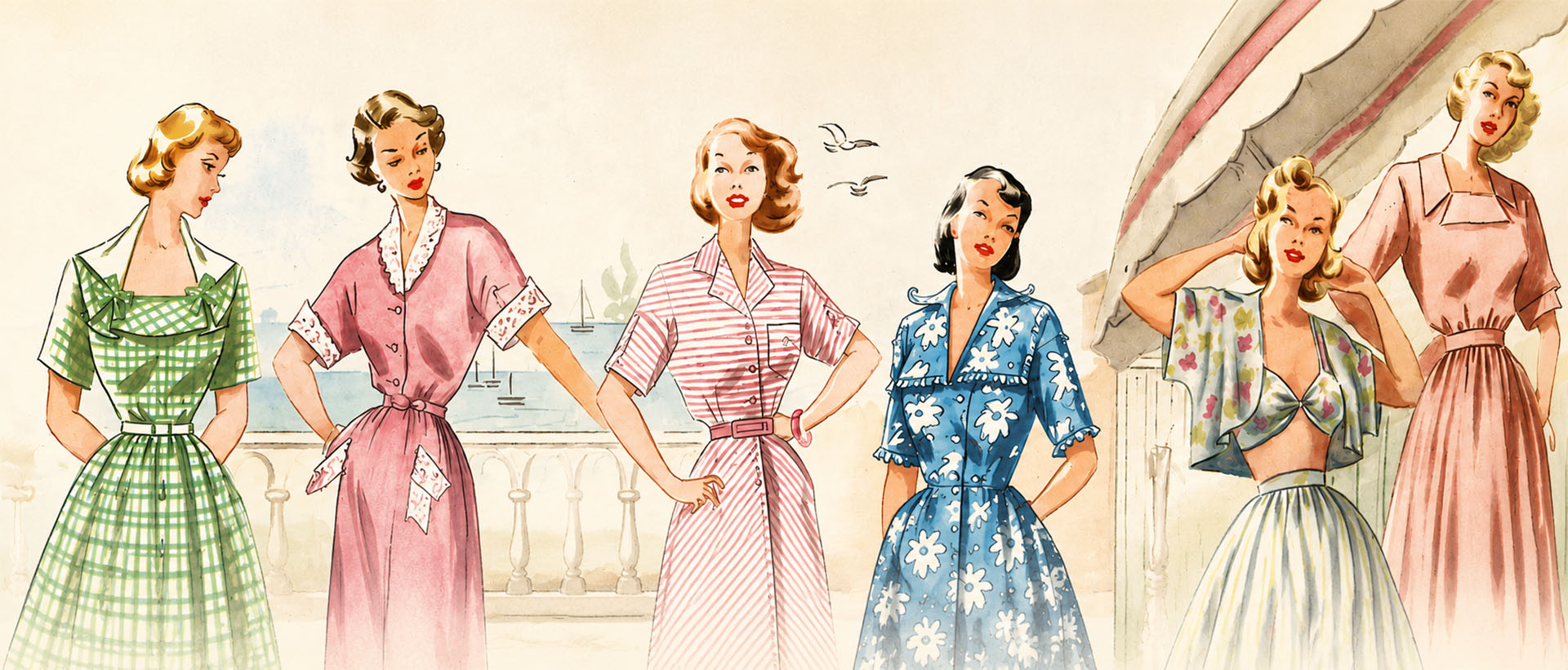
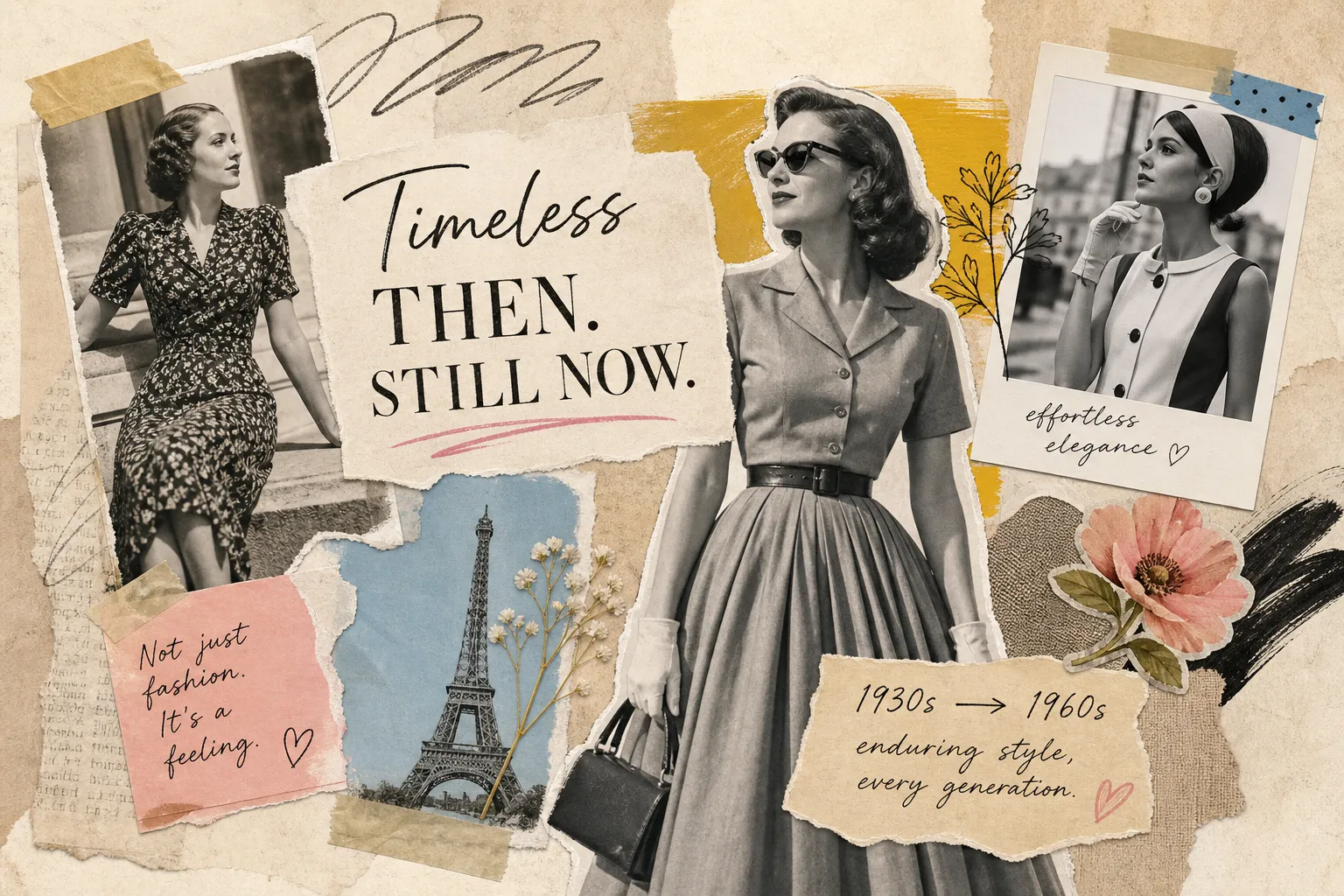
There’s a particular moment that happens to a lot of vintage makers and craft enthusiasts. You’re scrolling through pattern images, or flicking through a box at a market, and something from the 1940s or 1950s makes you stop completely. It’s not that it looks right. The waist sits exactly where a waist should sit. The collar has a confidence to it. The silhouette holds a logic that feels almost like common sense, even though you can’t immediately explain why.
That feeling isn’t nostalgia in the sentimental sense. It’s more like recognition, as though the design is tapping into something you already understood without knowing it. Browsing the pattern collection at My Vintage Wish produces exactly this effect: hundreds of authentic patterns from the 1930s through to the 1960s sitting in one catalogue, and suddenly these decades stop feeling like history. They feel like possibility.
So what is it, exactly, that keeps these eras alive in 2026? This piece looks at the aesthetics, the cultural weight, the quality of construction, and the nostalgia that make style from the 1930s to the 1960s so persistently compelling, not just to collectors and costume makers, but to anyone who has ever picked up a pair of knitting needles or sat down at a sewing machine and wanted to make something that actually means something. Continue reading Why vintage fashion from the 1930s to 1960s endure