
Posted on

Sew Vintage Underwear at Home: A Beginner’s Guide to 1940s and 1950s Lingerie

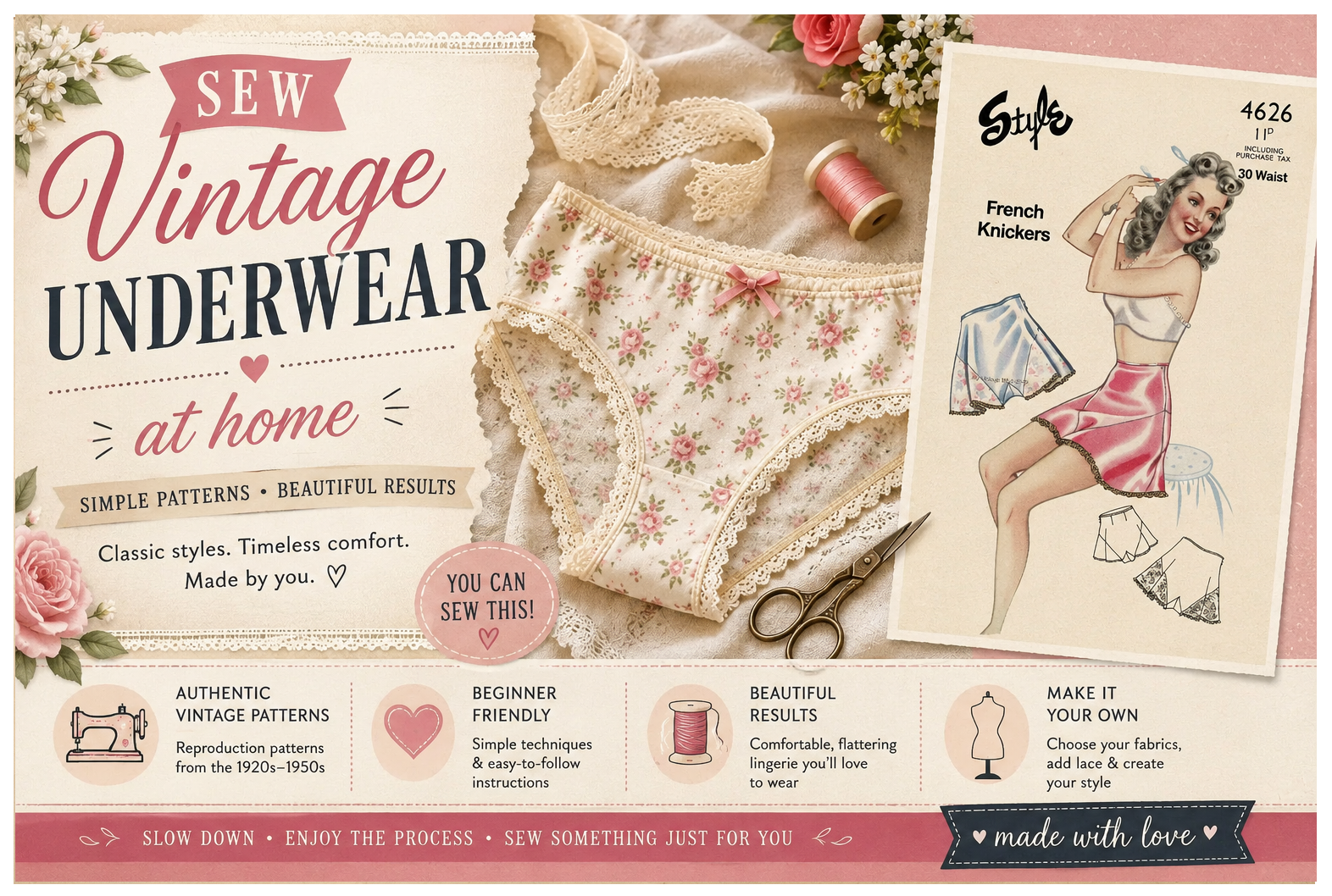
Vintage underwear is one of the easiest ways to start sewing historical clothing. Unlike dresses, jackets or tailored skirts, most 1940s and 1950s lingerie patterns use relatively few
pattern pieces, simple construction methods and forgiving fits. A pair of vintage knickers can often be completed in under an hour, while a basic slip makes an excellent weekend
project.

At My Vintage Wish, we’ve found that many sewers assume lingerie is an advanced skill reserved for experienced dressmakers. In reality, vintage underwear is often a better first
project than a fitted blouse or skirt because it teaches neat seams, accurate cutting and finishing techniques without the pressure of visible fitting issues.

This guide explains how to choose your first pattern, select suitable fabrics and complete your first vintage underwear project with confidence. Continue reading Sew Vintage Underwear at Home: A Beginner’s Guide to 1940s and 1950s Lingerie
Posted on

How to Start Sewing Vintage Clothes: A Beginner’s Guide for Vintage Lovers

How to Start Sewing Vintage Clothes: A Beginner’s Guide for Vintage Lovers

There’s a moment that happens to almost every person who decides to start sewing vintage clothes.

You’ve found a pattern you love, perhaps a 1950s tea dress, a smart 1940s shirtwaist, or an elegant 1930s gown that seems impossibly glamorous. The whole project feels exciting and entirely achievable. Then you open the envelope. The size on the front bears no resemblance to anything you recognise. The instructions reference techniques you’ve never heard of. The illustration on the cover looks nothing like the pattern pieces spread across your table. If that sounds familiar, you’re not doing anything wrong. In fact, you’re experiencing exactly what almost everyone experiences when they first discover vintage sewing.

Vintage sewing has its own learning curve. It isn’t quite the same as modern dressmaking, and it certainly isn’t the same as buying clothes from the high street. Yet for many vintage enthusiasts, learning to sew becomes a natural extension of collecting, wearing, and appreciating vintage fashion.

Whether you’ve discovered reproduction patterns through My Vintage Wish, inherited a collection of original sewing patterns, or simply fallen in love with historical fashion, sewing
offers a deeper connection to the garments and decades that inspire you.
The good news is that the learning curve is shorter than you think.

Continue reading How to Start Sewing Vintage Clothes: A Beginner’s Guide for Vintage Lovers

Posted on

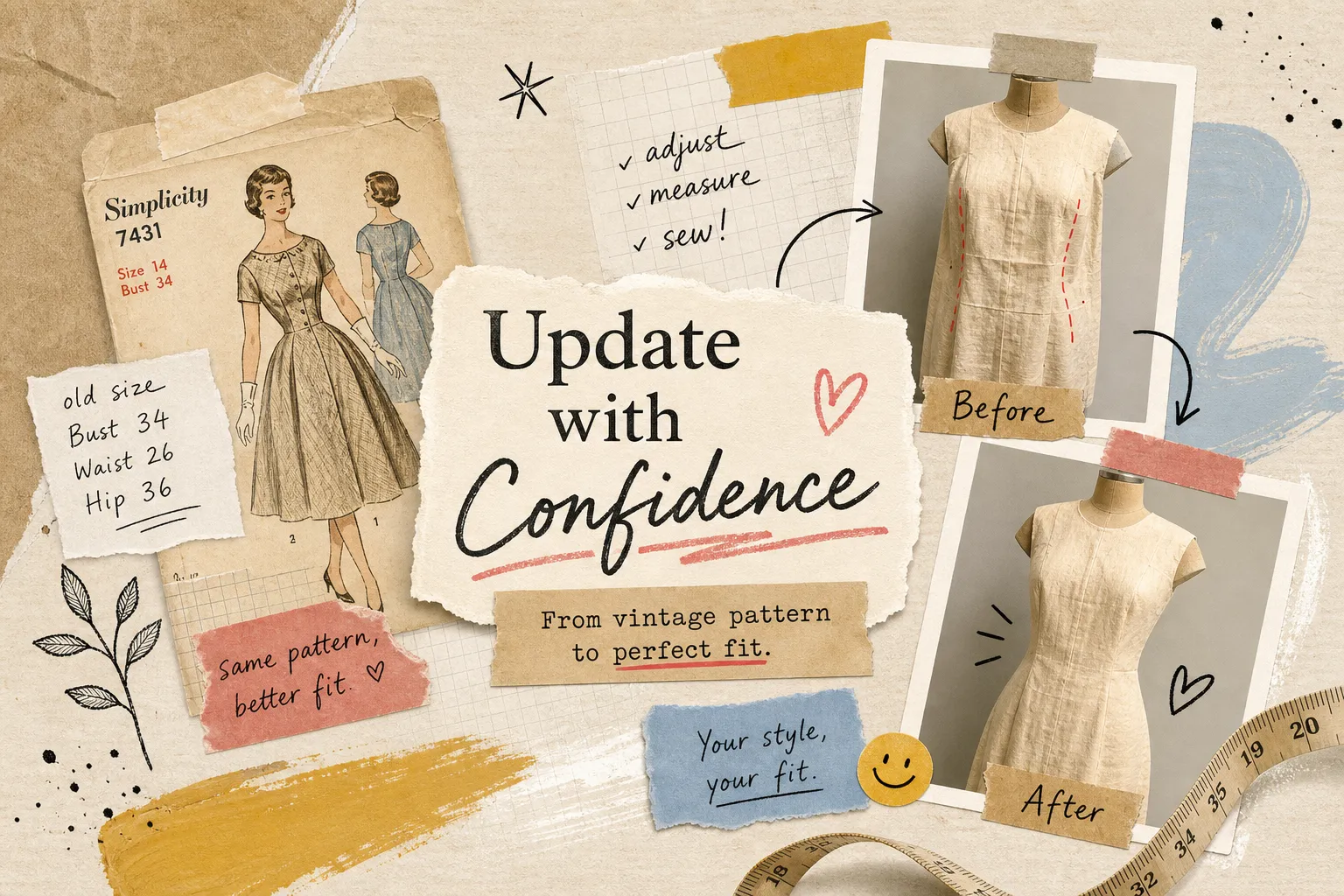
How to Adjust Old Patterns to Modern Sizing

Featured content

How to Adjust Old Patterns to Modern Sizing

You’ve found it.

The pattern you’ve been looking for: a beautifully illustrated 1940s tea dress with a fitted bodice, a gentle flare, and the kind of effortless elegance that modern patterns rarely capture.
Perhaps you spotted it whilst browsing My Vintage Wish, where original sewing patterns from the 1930s, 1940s, 1950s and 1960s sit waiting to be brought back to life. From wartime
utility dresses and elegant tea frocks to fitted cardigans and classic skirt designs, every pattern comes with its own sizing challenges and rewards. You pick up the envelope, turn it
over and find the size chart. Then you stop. A size 16 that lists a 34-inch (86 cm) bust. A waist measurement that seems impossibly small. The number on the envelope doesn’t match
anything in your experience of modern sizing, and for a moment the whole project feels pointless.

This is the point where many sewers either abandon the pattern entirely or push ahead without understanding the measurements, only to end up with something that doesn’t fit.
Neither outcome is necessary.

Learning how to adjust old patterns to modern sizing is completely achievable. The process follows a logical sequence: measure first, compare measurements, account for ease, make
size adjustments, refine the fit where needed, and test everything in a toile before cutting your final fabric. Continue reading How to Adjust Old Patterns to Modern Sizing