

Vintage underwear is one of the easiest ways to start sewing historical clothing. Unlike dresses, jackets or tailored skirts, most 1940s and 1950s lingerie patterns use relatively few
pattern pieces, simple construction methods and forgiving fits. A pair of vintage knickers can often be completed in under an hour, while a basic slip makes an excellent weekend
project.
At My Vintage Wish, we’ve found that many sewers assume lingerie is an advanced skill reserved for experienced dressmakers. In reality, vintage underwear is often a better first
project than a fitted blouse or skirt because it teaches neat seams, accurate cutting and finishing techniques without the pressure of visible fitting issues.
This guide explains how to choose your first pattern, select suitable fabrics and complete your first vintage underwear project with confidence.
Quick Answer: What’s the Easiest Vintage Underwear to Sew?
If you’re completely new to vintage sewing, start with:
- 1940s knickers or sports panties
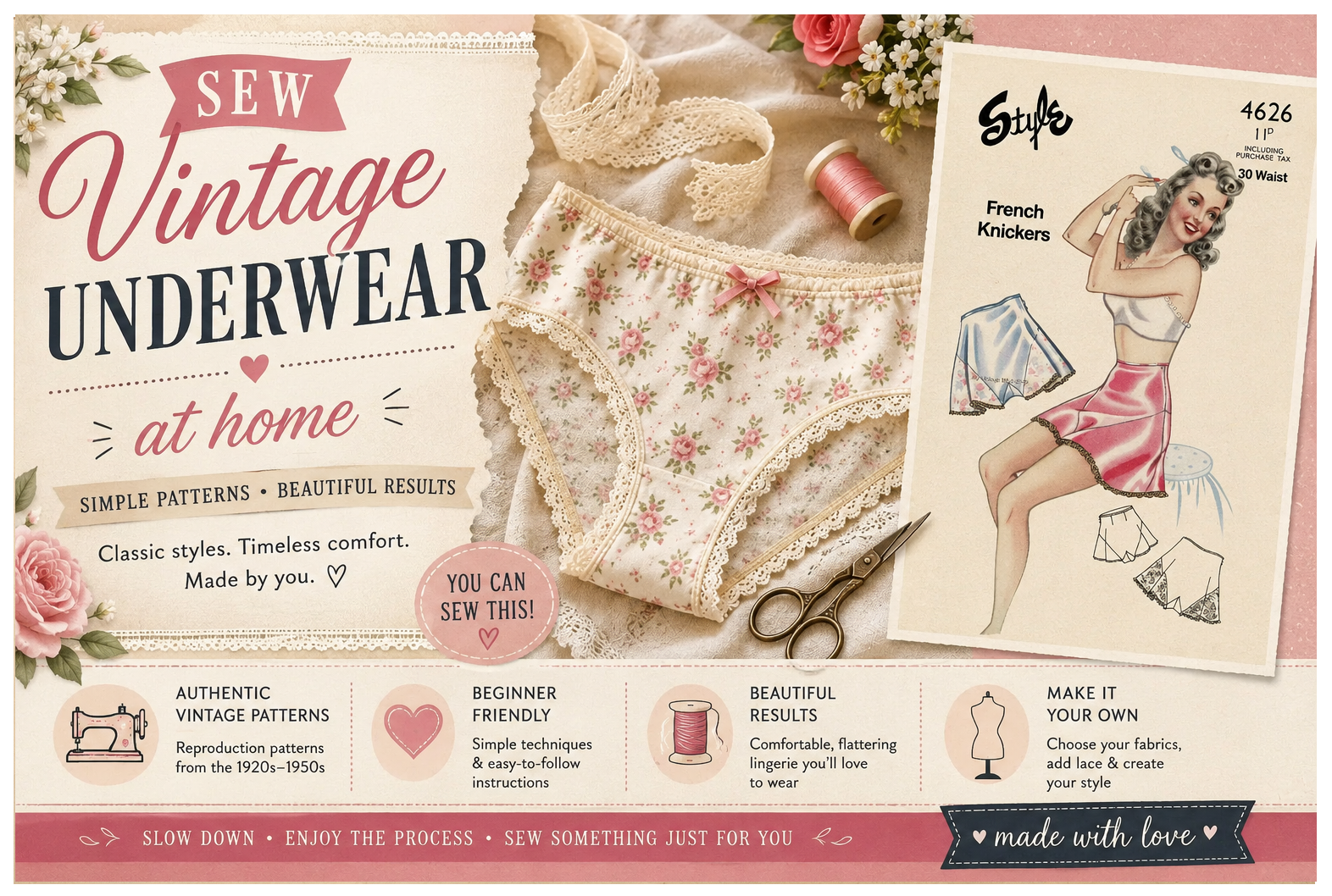
- French knickers
- Simple tap pants
- A basic slip
Avoid corsets, structured bras and foundation garments until you’ve gained experience with basic construction techniques.
Why Vintage Underwear Is Easier Than You Think
Many beginners expect lingerie to be difficult because modern underwear often relies on stretch fabrics, specialist elastics and complex fitting. Most vintage underwear patterns
are different. Many 1940s designs were created during wartime fabric restrictions, resulting in simple, economical garments with minimal pattern pieces and straightforward
construction. That simplicity makes them surprisingly beginner-friendly today.
A typical pair of vintage knickers teaches:
- Accurate cutting
- Basic seam construction
- Elastic casings
- Narrow hems
- Pressing techniques
Those same skills transfer directly into almost every other sewing project.
Choosing Your First Vintage Underwear Pattern
Your first pattern matters more than your fabric choice or sewing machine. A clear, well-drafted reproduction pattern removes much of the guesswork and allows you to
focus on learning the construction process.
Reproduction vs Original Vintage Patterns
Original vintage patterns are appealing, but they often come with challenges:
- Fragile paper
- Missing instructions
- Incomplete pieces
- Outdated sizing information
For beginners, reproduction patterns are usually the better option. They preserve the original design while offering clean pattern pieces and practical instructions suitable
for modern home sewing.
What to Look For
Before buying a pattern, check:
- Finished measurements
- Fabric requirements
- Notions list
- Seam allowance information
- Skill level
Ignore the size number on the envelope and focus on actual measurements. Vintage sizing rarely corresponds to modern clothing sizes.
The Best Fabrics for Vintage Underwear
Fabric choice has a major impact on comfort and authenticity. Historically, most underwear from the 1920s through the 1950s was made from natural fibres. The best beginner
fabrics include:
- Cotton batiste
- Cotton lawn
- Lightweight linen
- Fine cotton muslin
These fabrics are breathable, comfortable and easy to sew.
Fabrics to Avoid
Many beginners are tempted by modern synthetic fabrics. For vintage-style underwear, they are rarely the best choice. Avoid:
- Heavy polyester fabrics
- Very sheer voile
- Thick poplin
- Slippery synthetic satins
A simple cotton fabric will usually produce a more authentic result and be easier to sew.
The Supplies You’ll Need
One reason vintage underwear makes an excellent beginner project is that it requires very little equipment. Most sewers already own everything needed:
- Domestic sewing machine
- Sharp fabric scissors
- Pins or clips
- Hand sewing needle
- Iron
- Matching thread
A serger is useful but entirely optional. Many original garments were sewn without one.
The 5 Most Common Beginner Mistakes
After working with vintage patterns for years, we’ve noticed the same mistakes appearing repeatedly.
1. Choosing a Pattern That’s Too Ambitious
Many beginners start with corsetry or structured lingerie. Simple knickers or a slip provide a much smoother introduction.
2. Trusting the Envelope Size
Vintage sizes are not modern sizes. Always compare finished measurements against your own body measurements.
3. Skipping Pressing
Pressing each seam as you sew dramatically improves the final result. Many fitting and construction issues disappear with proper pressing.
4. Using the Wrong Fabric
Heavy fabrics create bulky seams and uncomfortable garments. Lightweight natural fibres nearly always produce better results.
5. Rushing the Finishing
The details that create a genuinely vintage look are usually found in the finishing:
- Narrow hems
- French seams
- Cotton lace
- Bias binding
- Period-appropriate buttons
Take your time here.
How to Sew a Pair of Vintage Knickers
Most 1940s and 1950s knicker patterns follow a similar construction sequence.
Step 1: Prepare Your Fabric
Wash, dry and press your fabric before cutting. Transfer all markings accurately.
Step 2: Cut the Pattern Pieces
Follow the grainline markings carefully. Accurate cutting prevents fitting problems later.
Step 3: Sew the Main Seams
Join the front and back sections. French seams are ideal because they create a neat finish inside the garment.
Step 4: Insert the Gusset
The gusset should be sewn before closing the final crotch seam. This creates a cleaner finish and simplifies construction.
Step 5: Add Elastic
Distribute elastic evenly around the waist and leg openings. Many beginners accidentally stretch one section more than another, resulting in uneven gathers. Pin quarter points
first to maintain balance.
Step 6: Finish and Press
Add hems, lace or binding as required. Give the finished garment a final press before wearing.
Understanding Vintage Fit
One of the biggest surprises for beginners is how different vintage fit can feel. Many vintage garments were designed to work with structured undergarments and different
posture expectations. Rather than relying on the pattern size, compare the actual pattern measurements to:
- Your body measurements
- A favourite garment you already own
This approach produces far more reliable results.
When You’re Ready for a Vintage Slip
After completing one or two pairs of knickers, a slip is the logical next project. The techniques remain largely the same:
- Seams
- Hems
- Pressing
- Finishing
The only difference is that you’re applying them to a larger garment. A simple 1940s or 1950s slip introduces neckline finishing, longer seams and additional fitting practice
without dramatically increasing complexity.
Why Vintage Underwear Is Such a Rewarding Project
Vintage underwear occupies a unique place in sewing. The garments are practical, relatively quick to make and genuinely useful. They also provide an excellent introduction to
vintage construction methods before moving on to dresses, blouses or tailoring. Most importantly, they allow you to develop confidence through small, achievable projects. That’s
often the fastest path to becoming a better sewer.
Frequently Asked Questions
Is vintage underwear suitable for beginners?
Yes. Simple 1940s knickers, French knickers and slips are among the most beginner-friendly vintage sewing projects available.
Do I need specialist equipment?
No. A basic sewing machine and standard sewing tools are sufficient.
How long does it take to sew vintage knickers?
Most beginners can complete a simple pair within one to two hours.
Are reproduction patterns better than original patterns?
For beginners, yes. They are easier to use, more durable and usually provide clearer instructions.
Final Thoughts
If you’re interested in vintage sewing but unsure where to start, vintage underwear is one of the most approachable projects available. Choose a simple reproduction pattern,
work with a lightweight cotton fabric and focus on learning good sewing habits rather than perfection. The techniques you learn on a pair of 1940s knickers or a simple slip will
carry into every future sewing project. And unlike many beginner projects, you’ll finish with something genuinely useful, wearable and uniquely your own.
You must be logged in to post a comment.