
There’s a particular moment that happens to a lot of vintage makers and craft enthusiasts. You’re scrolling through pattern images, or flicking through a box at a market, and something from the 1940s or 1950s makes you stop completely. It’s not that it looks right. The waist sits exactly where a waist should sit. The collar has a confidence to it. The silhouette holds a logic that feels almost like common sense, even though you can’t immediately explain why.
That feeling isn’t nostalgia in the sentimental sense. It’s more like recognition, as though the design is tapping into something you already understood without knowing it. Browsing the pattern collection at My Vintage Wish produces exactly this effect: hundreds of authentic patterns from the 1930s through to the 1960s sitting in one catalogue, and suddenly these decades stop feeling like history. They feel like possibility.
So what is it, exactly, that keeps these eras alive in 2026? This piece looks at the aesthetics, the cultural weight, the quality of construction, and the nostalgia that make style from the 1930s to the 1960s so persistently compelling, not just to collectors and costume makers, but to anyone who has ever picked up a pair of knitting needles or sat down at a sewing machine and wanted to make something that actually means something.
The aesthetics that stop you mid-scroll
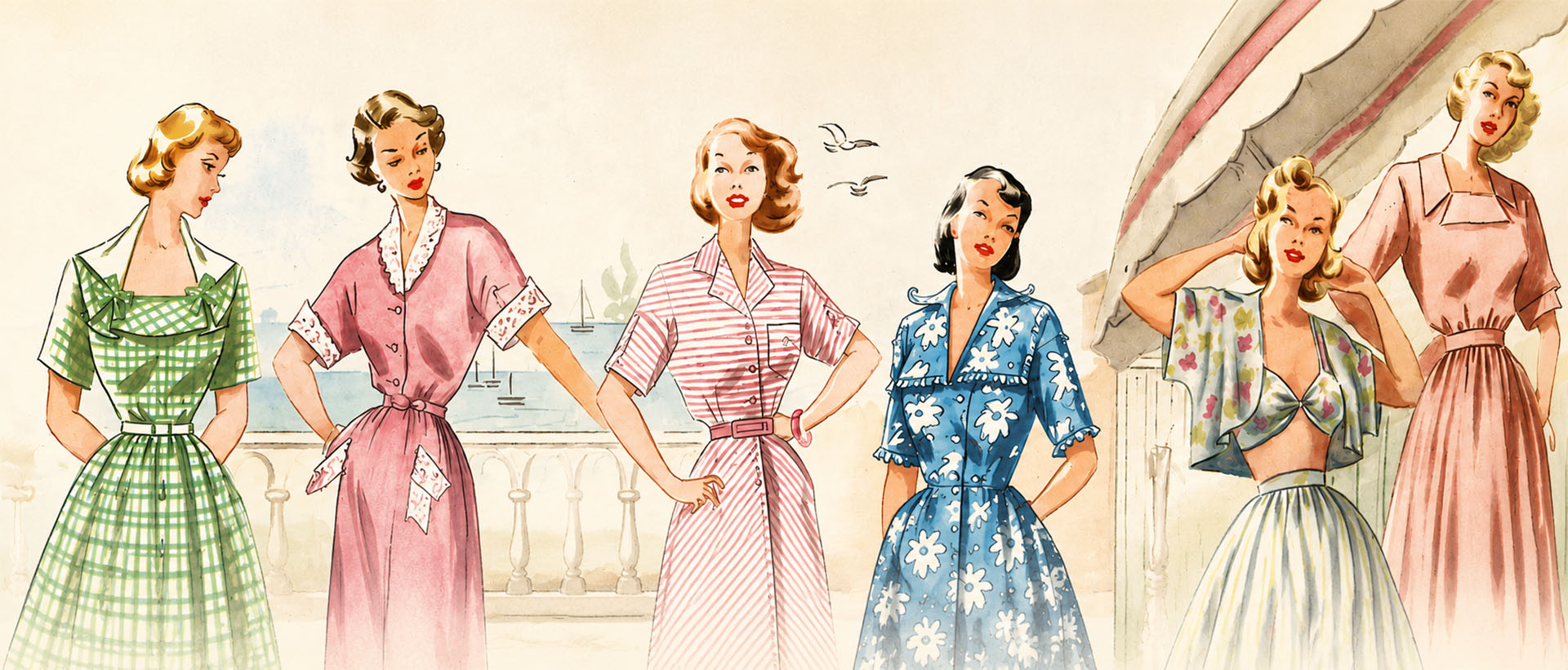
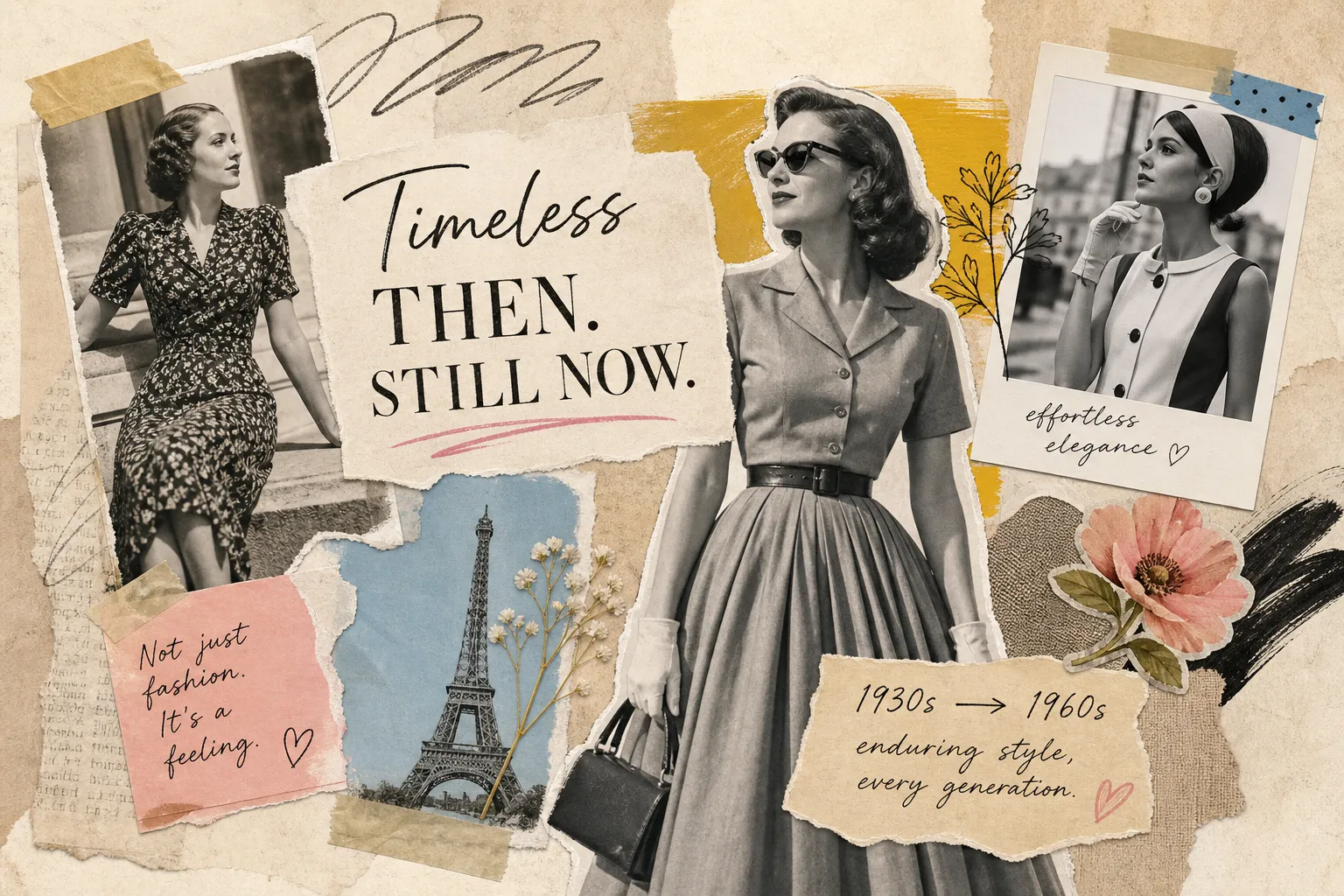
Each decade from the 1930s to the 1960s spoke a coherent visual language, and that coherence is most of what separates these garments from the blur of contemporary fast fashion. The 1930s bias cut clung and flowed, following the body rather than imposing a shape on it. The 1940s nipped the waist sharply and squared the shoulders, creating architectural form from limited fabric. The 1950s went theatrical: full skirts, rounded hips, bodices that cinched to a point. The early 1960s stripped back to geometric precision. Each era knew what it was trying to say, and it said it with the whole garment.
The silhouette as a design statement
What made these silhouettes structurally different from modern design was how they were built: from the inside out. Boning, interfacing, darts, gores, carefully placed padding, and garments cut on the bias all worked together to create shape before the fabric even touched the body. Modern fashion typically relies on stretch, ease, and volume. Mid-century construction relied on engineering. The result is that garments from these decades don’t just look intentional; they feel intentional when you put them on, because the shape is built in rather than suggested.
Details that contemporary fashion edits out
Beyond the silhouette, it’s the details that reward closer attention: a hand-finished hem, decorative buttons chosen with care, precise collar shaping, tucks and darts that took real time to perfect. These weren’t decorative flourishes added at the end of the process. They were part of the design logic, the points where the maker’s attention was most concentrated. When you handle an original garment from this era, or work through an original pattern, you feel that attention in every seam. It’s this quality that makes authentic vintage clothing feel richer to wear and richer to study than most things produced today.
The cultural weight stitched into every decade
For a British audience, fashion from these decades carries something extra. These clothes were shaped by some of the most significant events in modern history: a world war, economic scarcity, social upheaval, and the cautious, joy-filled rebuilding that followed. The garments of the 1930s to the 1960s aren’t just aesthetically appealing. They’re documents. When you wear one, or make one, you’re in conversation with all of that.
Wartime ingenuity and the make-do-and-mend spirit
Clothing rationing came into effect in Britain on 1 June 1941, and with it came a creative constraint that shaped fashion for the rest of the decade. Utility regulations restricted fabric use, reduced skirt lengths, limited pleating, and cut back on buttons and trim. The government’s Make Do and Mend campaign taught women to repair, rework, and reimagine what they already owned rather than buy new. The result wasn’t just practical: it produced a distinctive wartime aesthetic of squared shoulders, defined waists, and pared-back tailoring that still looks sharp today. For anyone frustrated by the disposable logic of modern clothing culture, this spirit of ingenuity resonates in a way that goes well beyond historical interest. Read more about how WWII shaped British style.
Post-war joy and the promise of the New Look
The emotional release of the late 1940s and 1950s poured itself into fashion. Dior’s New Look of 1947 felt like a collective exhale: full skirts, cinched waists, and a return to the kind of volume that wartime restrictions had forbidden. There was something almost defiant about the extravagance of it, a deliberate statement that scarcity was over. This post-war optimism is woven into the era’s aesthetic in a way that never fully fades, which is part of why that decade in particular keeps returning as a cultural reference point. The warmth of that period isn’t imagined. It’s structural, built into the clothes themselves through full skirts, heavier fabrics, generous linings, and silhouette proportions designed to feel abundant.
Why mid-century construction feels different in your hands
There is a tactile reality to mid-century garments that becomes immediately obvious to anyone who handles them. These clothes were built to last, altered, repaired, and handed down rather than discarded after a season. That expectation shaped every decision, from fabric choice to the depth of the seam allowance.
Built to outlast the decade it was made in
Heavier fabric weights, carefully finished seams, and construction methods designed around repairability were the standard rather than the exception. The contrast with modern fast fashion couldn’t be sharper: where contemporary garments are typically designed for short-term use, mid-century pieces assumed a long relationship with their owner. They were made to be taken in, let out, relined, and remade. This is construction built around respect for the garment, and you feel that respect when you hold one.
Fabric and finishing as a craft in themselves
Wool crepe, cotton lawn, rayon, bouclé, tweed: the fabrics of these decades had weight and character that most modern equivalents don’t replicate. Finishing techniques, hand-stitched hems, interfaced collars, and fully lined bodices, gave garments a structure that lasted and a drape that responded to the body over time. Working with an original pattern from this era, even if you’re using contemporary fabric, reconnects you with this approach to construction. The pattern instructions carry the logic of how these garments were meant to behave, and following them teaches you something that no modern commercial pattern quite replicates.
The nostalgia factor, and why it hits so hard
Nostalgia isn’t simple sentimentality. Fashion historians and consumer researchers have observed that it functions as a psychological response to disconnection, a reaching toward something that feels more certain, more particular, more human than the present moment offers. The 1930s to 1960s keep returning as a cultural reference point not just in fashion but in film, interior design, and music because they represent something many people feel is genuinely missing: slower living, individual identity through dress, craftsmanship as a form of self-expression.
Fashion as emotional memory and cultural anchor
What’s striking about this pull is that it doesn’t require personal memory. People who weren’t alive in the 1950s still respond to its aesthetic with something that feels like recognition. Psychologist Constantine Sedikides, whose research on nostalgia has been widely cited, has shown that nostalgic responses activate feelings of comfort, belonging, and positive identity, which may explain why these decades function as cultural anchors regardless of whether you have a direct connection to them. The clothes carry an emotional charge that’s genuinely independent of era-specific lived experience.
Why these decades keep cycling back into the spotlight
Fashion revival cycles typically re-emerge roughly every 20 years, driven by generational change and reinforced by pop culture, a pattern noted by fashion commentators and observed across multiple revival waves. The 1950s surfaced again in the 1970s rockabilly scene. The 1940s wartime aesthetic re-emerged in the 1990s. In 2026, retro aesthetics and pre-loved clothing are more culturally visible than they’ve been in years, driven in large part by the sustainable fashion movement. When choosing to make rather than buy becomes an act of values as much as aesthetics, the decades that modelled exactly that philosophy become the natural place to look. This broader pattern of recurrence is discussed in studies of nostalgia cycles in the fashion industry.
Modern makers are bringing these decades back stitch by stitch
The most active way these styles survive isn’t in shops or museums. It’s in the work of sewists, knitters, and crocheters across the UK who are turning back to original-era patterns in growing numbers, a trend reflected in the rise of vintage sewing communities online and increased search interest in period-specific makes. This isn’t nostalgia for its own sake. It’s a deliberate choice to create something with authenticity, personal meaning, and construction quality that modern commercial patterns rarely offer.
Why crafters are choosing original-era patterns over modern alternatives
There is a meaningful difference between a pattern genuinely designed in 1948 and a modern pattern designed to look as though it might have been. The original carries the real design logic of the era: the construction sequence, the shaping decisions, the proportional thinking that produced those silhouettes. Crafters who want the actual 1940s tea dress or the genuine 1950s cardigan seek out original-era patterns because nothing else quite replicates them. My Vintage Wish puts these within reach without the cost or uncertainty of tracking down originals at auction or through a second-hand marketplace. With a catalogue covering everything from Fair Isle knitwear to wartime utility dresses and 1950s fitted cardigans, it brings the whole era into your making space at accessible prices. You can save favourites to your Wishlist, My Vintage Wish to build a project list for later.
Starting your first vintage make
Start with an era you’re already drawn to, then choose a pattern that suits your current skill level rather than stretching too far too soon. A straightforward 1950s cardigan or a simple 1940s blouse will teach you the construction logic of the period without overwhelming you, or try a 1950s sun dress pattern as a similarly approachable project: 1950s Sun Dress Sewing Pattern, Shaped Neckline with Buttoned Tabs, My Vintage Wish. The process itself is part of the pleasure: following pattern instructions written sixty or seventy years ago, understanding the choices that were made, making something that reflects real design thinking rather than contemporary convenience. You don’t need to be an expert. You just need to begin. For additional resources there are collections of free vintage sewing patterns online that can help you practise period techniques.
Slow fashion, self-expression, and why making your own matters now
Style from the 1930s to the 1960s isn’t a niche interest held by a small group of enthusiasts. It’s increasingly a considered response to the problems of modern clothing culture, and making your own period-inspired pieces is both a creative act and a quiet form of resistance against the disposable logic that dominates the current market.
Fast fashion fatigue and the slow stitch alternative
Growing numbers of people across the UK are stepping away from the fast fashion cycle, choosing to make instead of buy and to wear what they’ve made for years rather than seasons. Garments you create from a period pattern last because they’re built to last. They fit your actual measurements because you made them for your body. They reflect your taste rather than a trend algorithm’s best guess at what you might briefly want. The sustainable fashion movement and the vintage craft revival are two expressions of the same instinct: a preference for things made with care and worn with intention. Practical guides to sustainable sewing and eco-friendly fashion can help you make choices that reduce waste while preserving authentic techniques.
A piece of clothing that carries your own story
The emotional value of a handmade piece from a period pattern is difficult to overstate. The cardigan you spent six weeks knitting from a 1952 design isn’t just a cardigan. It’s the specific pattern you found, the wool you chose at a market or ordered with intention, the evenings you spent working the stitches, the moment you cast off the final row. That accumulation of decision and attention is what makes it genuinely yours in a way that nothing bought off a rack can be. These are the objects that get kept, handed down, and valued for reasons that have nothing to do with their original price.
The best vintage piece you’ll ever own is the one you make yourself
Style from the 1930s to the 1960s endures because it does something that modern fashion rarely manages: it treats the person wearing it as an individual rather than a consumer. The aesthetics are beautiful and intentional. The cultural stories are rich and genuinely British. The construction is worth learning from, and the act of making connects you to a tradition that valued skill, care, and personal expression in equal measure.
If reading this has made you want to pick up needles or sit down at a sewing machine and try a pattern from one of these decades, that feeling is worth following. My Vintage Wish is the natural next step: hundreds of authentic patterns, from 1930s bias-cut dresses to 1950s Fair Isle pullovers, available to browse and buy today. Create your My account, My Vintage Wish to save patterns, add them to your project list, and start making. The history is there, waiting to become yours.